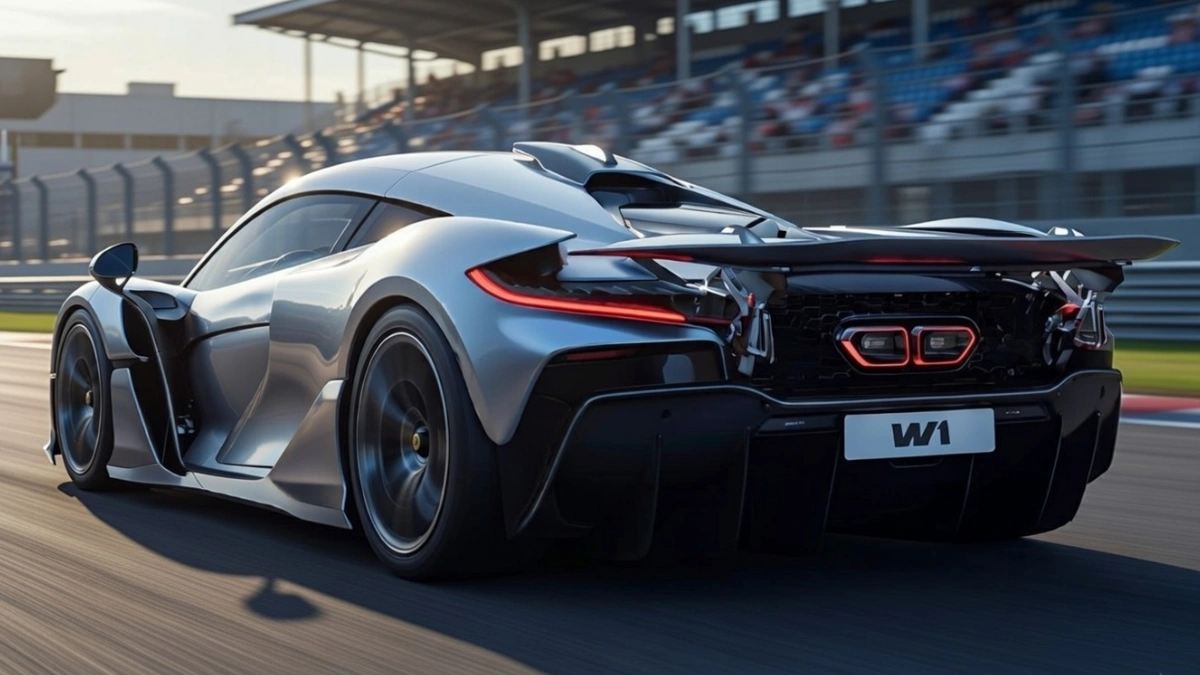
The hypercar world is buzzing with talk of the McLaren W1 Turbo 2026, a radical machine imagined to sit at the very top of McLaren’s performance hierarchy. Designed with a no-compromise mindset, the W1 Turbo concept represents extreme speed, advanced aerodynamics, and track-focused engineering aimed at drivers who demand the absolute edge of what’s possible.
While still conceptual, the W1 Turbo has already earned a reputation as one of the most aggressive performance visions linked to the McLaren name.
A New Hypercar Chapter for McLaren
The McLaren has built its legacy on lightweight construction, racing DNA, and relentless innovation. The W1 Turbo concept is imagined as the next evolution of that philosophy, positioned above traditional supercars and even beyond existing hypercar benchmarks.
It is conceived not as an everyday road car, but as a machine engineered to dominate records and redefine limits.
Extreme Turbocharged Powertrain Vision
At the heart of the McLaren W1 lies a brutally powerful turbocharged setup. Speculation centers on a next-generation twin-turbo V8, possibly enhanced with hybrid assistance, producing output figures that push well beyond the four-digit horsepower mark.
Instant throttle response, relentless acceleration, and sustained high-speed performance define its mission. This is power designed for lap times, not compromise.
Record-Breaking Performance Goals
The W1 Turbo is imagined with a singular focus on performance metrics. Ultra-lightweight construction, advanced cooling systems, and optimized power delivery aim to achieve blistering 0–100 km/h times, extreme top speeds, and consistent track performance under stress.
Every component is designed to withstand repeated high-load driving, making it a hypercar built for real-world speed records rather than theoretical numbers.
Radical Aerodynamics Inspired by Motorsport
Aerodynamics play a central role in the W1 Turbo’s identity. Aggressive front splitters, massive rear diffusers, active wings, and sculpted airflow channels are designed to generate enormous downforce without unnecessary drag.
The bodywork looks closer to a prototype race car than a traditional road vehicle, reinforcing its track-first character.
Interior: Minimal, Focused and Purpose-Built
Inside, the W1 Turbo concept strips luxury down to essentials. Carbon-fiber surfaces, racing-style seats, digital performance displays, and a compact steering wheel create a cockpit designed entirely around the driver.
Comfort takes a back seat to control, feedback, and precision. Every element serves performance.
Technology That Serves Speed
Advanced traction management, adaptive suspension, torque vectoring, and performance telemetry are imagined to be core features. These systems work together to help drivers extract maximum performance while maintaining control at extreme limits.
Rather than softening the experience, technology is used to sharpen it.
Exclusivity and Production Philosophy
If ever produced, the McLaren W1 Turbo would almost certainly be extremely limited, aimed at elite collectors and hardcore enthusiasts. Such exclusivity reinforces its status as a halo hypercar and a technological showcase rather than a volume model.
Who the W1 Turbo Is Built For
This hypercar is envisioned for fearless drivers and collectors who crave ultimate performance, raw engineering, and motorsport-inspired design. It is not about comfort, practicality, or daily usability. It is about pushing boundaries.
Conclusion: The McLaren W1 Turbo 2026 concept represents the most extreme expression of McLaren’s performance philosophy. With record-breaking ambitions, radical aerodynamics, and uncompromising power, it embodies a future where hypercars are defined by fearlessness and precision. Whether it remains a concept or becomes reality, the W1 Turbo stands as one of the most thrilling performance visions of the modern era.
Disclaimer: This article is based on concept interpretations, enthusiast speculation, and unofficial design discussions. McLaren has not announced a production model named W1 Turbo for 2026. All specifications and performance claims discussed are speculative and may remain conceptual only.